The Problem
- Overwhelmingly Large Tasks
- Burnout and Fatigue
- Immersion Breaking Third-Party Programs
Something that has always been a barrier for me when playing Stardew Valley, and other games of a similar genre, is how overwhelming the overarching goal(s) feels. The start of a Stardew Valley playthrough always feels motivating enough because there are a lot of short term goals: clean up the messy farm, meet all the people, get a basic source of revenue, etc. But when it comes time to start leveling up the farming operations (while still factoring in for aesthetics and vibes, of course) it gets a little daunting.
Currently, players who want to optimize their layouts must rely on external, third-party web tools. While these tools are powerful, they create a jarring "tab-hopping" experience that breaks immersion. Players are forced to manually translate coordinates from a browser to their game, leading to frequent errors, wasted in-game days, and the "finicky" frustration of managing two separate interfaces.
By integrating a planning tool directly into the game’s UI, we can bridge the gap between aspiration and execution. My goal was to design a feature that feels native to the Stardew Valley experience—one that allows players to blueprint their dream farm without the cognitive load of leaving the game world.
The Process
01. Brainstorming and Low-Fi Wireframing
Using wireframing as a brainstorming method, alongside research of the current UI.
02. Mid-Fi Wireframing
Building and implementing a style guide through analysis of the in-game design and art style.
03. Hi-Fidelity UI Mockup
Make the transition between wireframes and a polished UI, while honoring the style of the game.
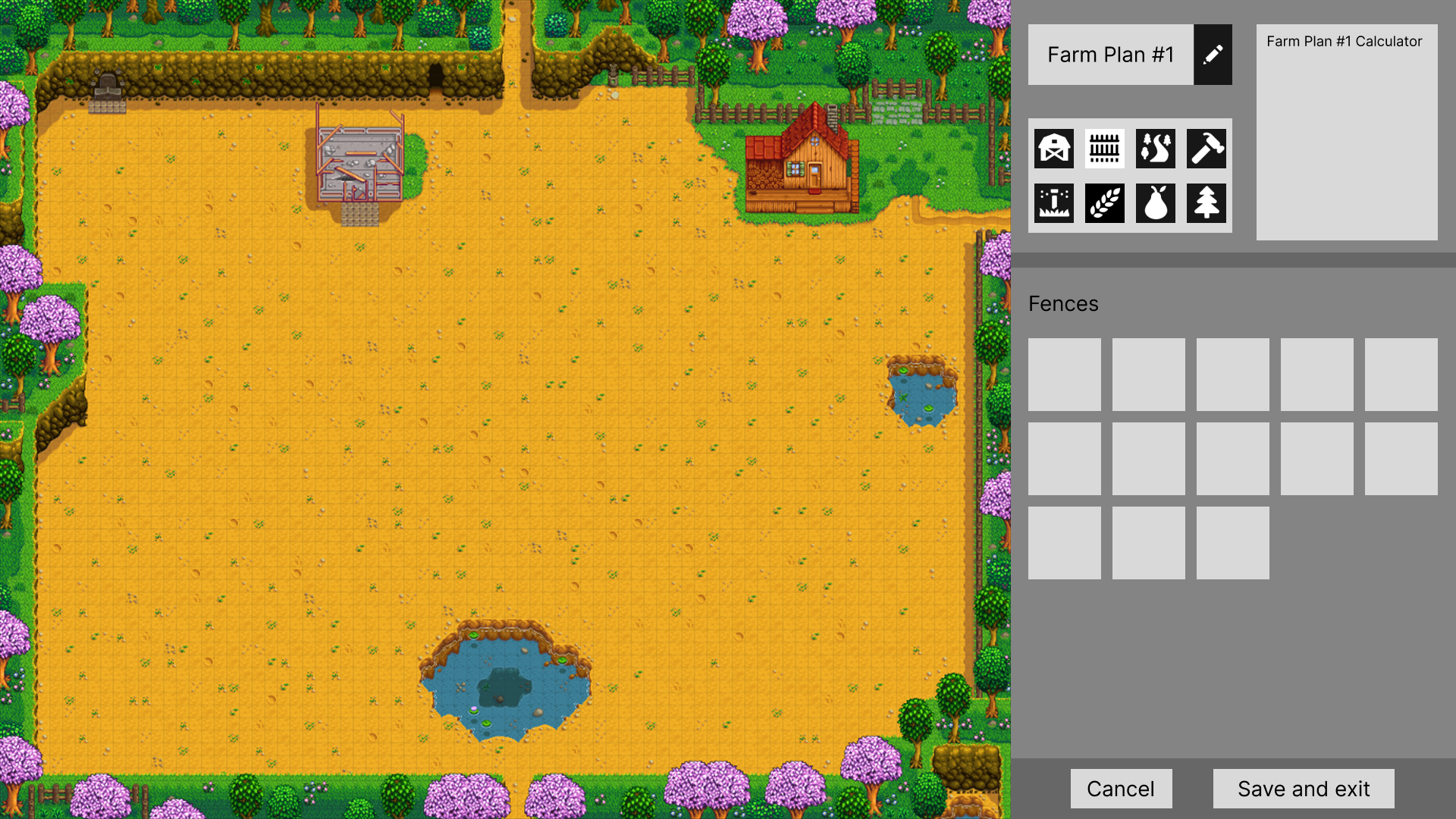
Brainstorming and Low-Fi Wireframing
I began by imagining what this interface might look like in game and what sort of features are going to be visible alongside it. By taking inspiration from an active third-party farm planner, stardewplanning.com, I place the UI to the right of a large, zoomed out version of an empty Stardew Valley farm. I blocked out areas for essential features: name of the active farm plan, an area for filtering the type of item you want to place down, a grid to display said items, and a save and exit button. The resource calculator feature was an idea I developed from my own habit of adding up all of the resources and items I will need to complete a project in any given sandbox game.
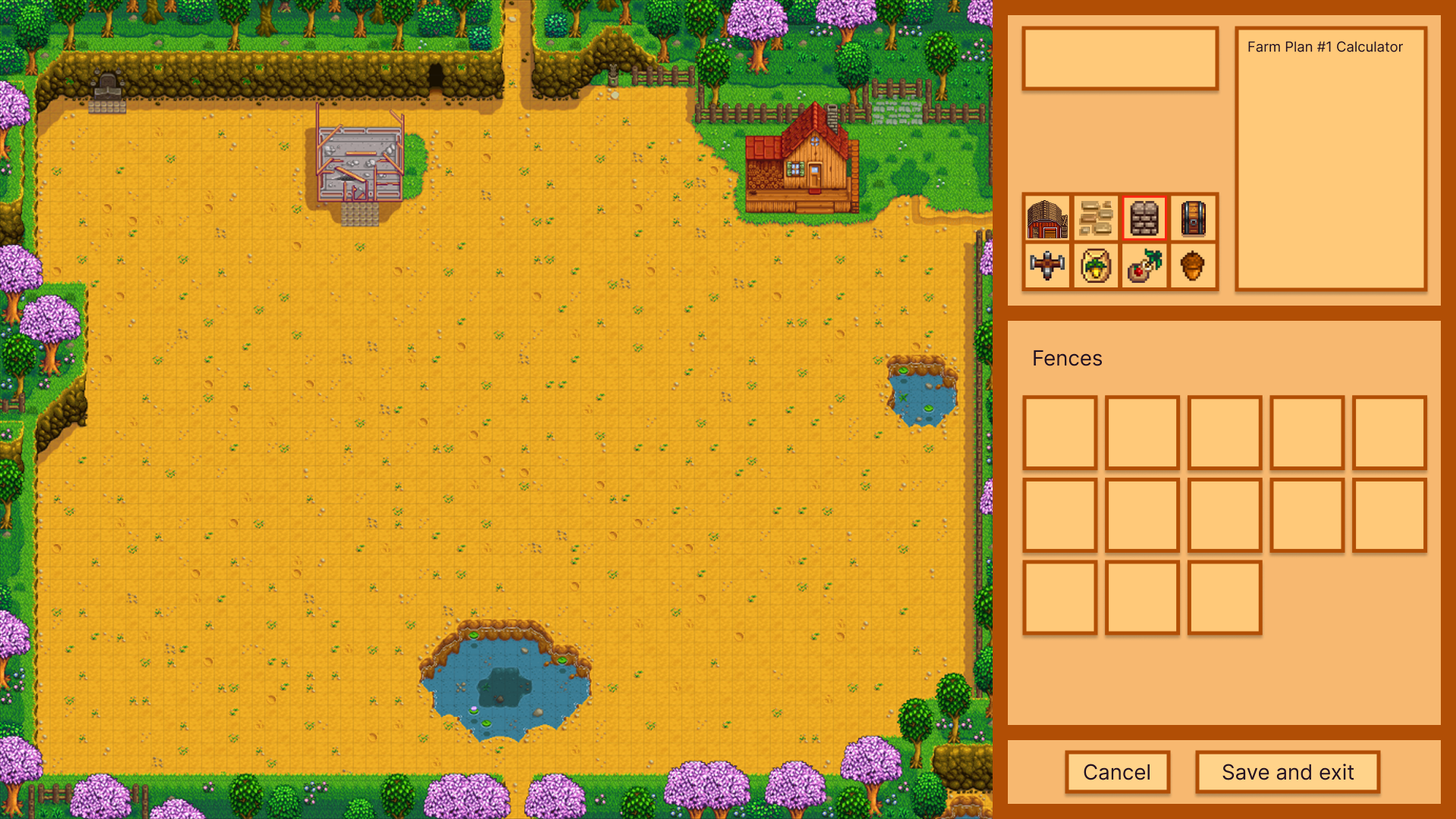
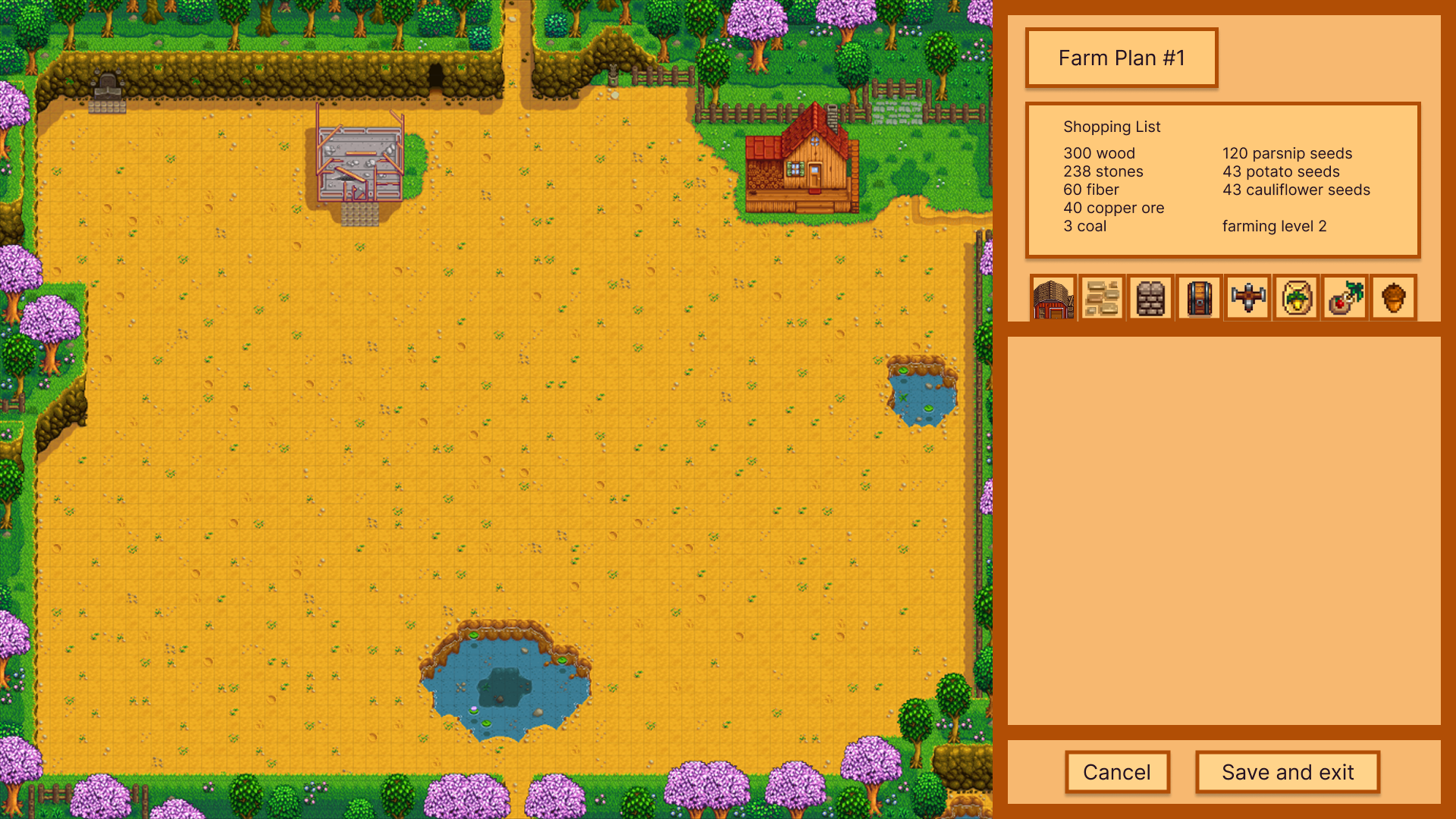
Mid-Fidelity Wireframing
Once I was satisfied with the layout after a few iterations, I moved on to color palettes and some more artistic design choices. The next obstacle was making this interface fit into the world of Stardew Valley, so I opened up the game to look at the current interface designs and artwork. I decided to base my designs off of that of the in-game inventory UI. I color picked the main colors and started adding them to my lo-fi wireframes, while iterating and updating the layout as I went.
Hi-Fidelity UI Mockup
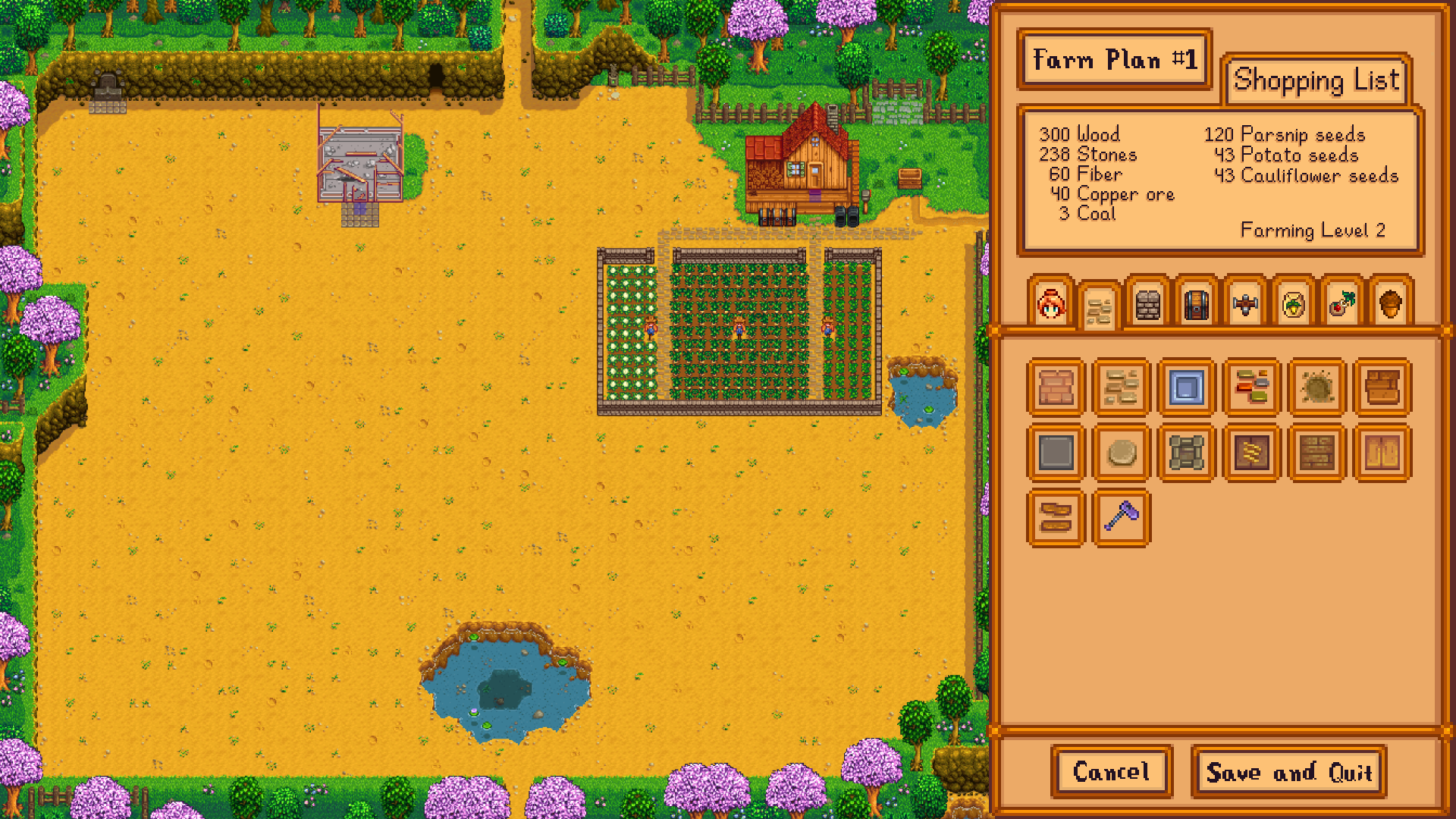
The bulk of this project was spent in Aseprite, my choice of pixel art software. Here I built my interface panel pixel by pixel, all the while referencing my in-game screen captures to make sure I was remaining true to the game’s art style. The only pixels not handplaced by me was the lettering in the “Farm Plan #1”, “Cancel”, “Save and Quit”, and the sprite icons that I pulled from the Stardew Valley Wikipedia.
The Solution
The final result is a native, in-game planning interface that transforms farm management from a daunting chore into a creative sandbox. By utilizing a diegetic UI design the tool maintains player immersion while providing high-level utility.
Key Features include:
- Native Visual Continuity: By mimicking the hand-drawn, pixel-perfect aesthetic of the original inventory system, the tool feels like a natural extension of the player’s toolkit rather than a disruptive "mod."
- Integrated Resource Calculator: A panel that tracks the total wood, stone, seeds, and specialized items needed for the current plan. This would eliminate the need for manual math and reduces the cognitive load of large-scale renovations.
- Category-Based Asset Browsing: A streamlined filtering system that organizes game assets (buildings, crops, fences, etc.) into intuitive tabs, allowing for rapid experimentation without cluttering the screen.
- The Planning: A low-stakes environment where players can visualize endgame goals early on, providing a clear roadmap that mitigates mid-game burnout and fatigue.
Ultimately, this project bridges the gap between aspiration and execution, allowing players to spend less time tab-hopping and more time cultivating their perfect virtual life.